Skip to content
Skip to content
Skip to content 
What Can a Hacker Do With Your Phone Number?
Reviewed and updated for 2026 to reflect current risks, terminology, and user concerns.
Last reviewed: March 2026
Your phone number alone is not enough to take over your device — but it can be used to cause serious damage to your accounts, your identity, and your finances without the attacker ever touching your phone.
The realistic risk sits in account abuse, not direct device compromise. SIM swap fraud, password reset manipulation, verification code interception, and targeted phishing are the actual threats. This guide explains each one clearly, helps you recognise the warning signs, and tells you what to do about it.
Quick Answer — What Are the Real Risks?
If someone has your phone number, they can potentially:
- Conduct a SIM swap — convince your carrier to transfer your number to their SIM, giving them your calls and SMS verification codes
- Abuse account recovery flows — use your number to trigger password resets on accounts that use it as a backup
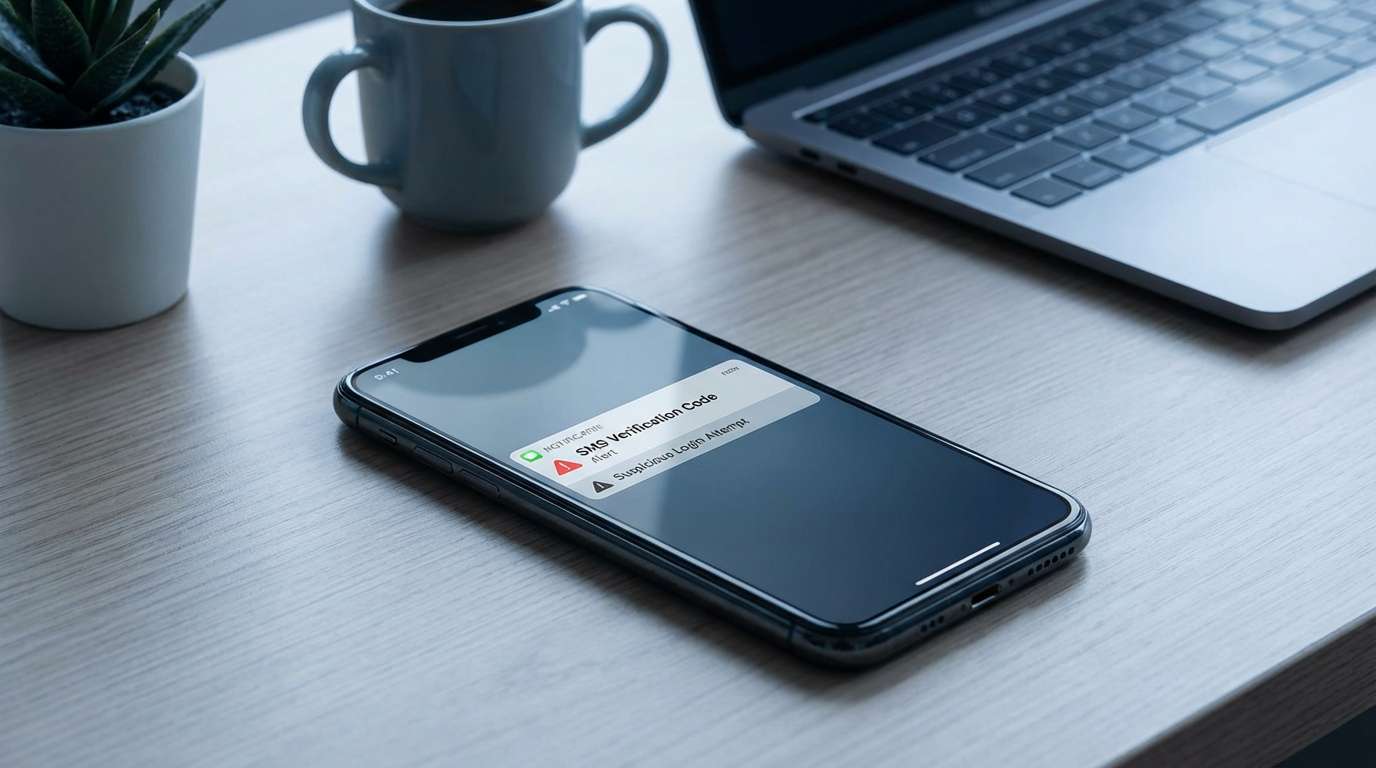
- Intercept SMS-based two-factor authentication codes sent to your number
- Target you with smishing — phishing attacks delivered via text message, often designed to look like your bank or a delivery service
- Impersonate you to your contacts via WhatsApp, Telegram, or similar platforms if they gain brief access to your messaging account
- Build a fuller profile by pairing your number with other leaked data to facilitate identity fraud
None of these require hacking your device directly. Most involve exploiting carrier processes, platform recovery flows, or human trust.
What a Phone Number Actually Exposes
A phone number on its own is closer to a postal address than a password. It tells someone how to reach you — and in some cases, how to impersonate you. What it does not do, by itself, is give an attacker access to your device, your data, or your accounts.
The risk increases substantially when a phone number is combined with other information. Email address, date of birth, home address, or leaked passwords found in data breaches — any of these paired with a phone number give an attacker significantly more to work with.
The threat landscape breaks down roughly into four categories:
Opportunistic targeting. Spam calls, scam texts, and robocall campaigns. Your number was on a list somewhere. Annoying, mostly low-risk.
Social engineering and impersonation. Someone uses your number to contact your bank, your carrier, or your contacts and claim to be you. Effectiveness depends on what other information they have.
Account recovery abuse. Many platforms — banking apps, social media, email providers — allow users to reset passwords or verify identity via SMS. If your number is listed as a recovery method, it becomes a potential entry point.
SIM swap and port-out fraud. The most technically significant risk. Your number is transferred to an attacker-controlled SIM, or ported to a different carrier entirely. From that point, every SMS verification code meant for you goes to them instead.
The Biggest Real Risks in 2026
SIM swap attacks remain the most consequential phone-number-based threat for ordinary users. The attacker contacts your mobile carrier — by phone, online, or sometimes in person at a retail store — and convinces them to transfer your number. The methods vary: sometimes they have enough personal information to pass identity verification, sometimes they exploit carrier staff through social engineering. Once the transfer goes through, they receive your calls and texts — including every 2FA code sent to your number. The FTC’s SIM swap guide explains how these attacks are executed and what carriers are expected to do to prevent them.
Verification code interception is closely related. Even without a full SIM swap, there are scenarios — particularly on older network infrastructure — where SMS messages can be intercepted. This is less common for ordinary users than SIM swap, but it is a real reason to move high-value accounts away from SMS-based 2FA.
Password reset abuse. Platforms that allow users to reset a password by receiving a code via SMS are, by design, treating your phone number as a form of identity proof. If an attacker controls your number — even temporarily — they can trigger resets on any account that uses it this way.
Smishing — phishing via SMS. This is less about exploiting the phone number technically and more about using it to deliver convincing fraud. A text claiming to be your bank, your delivery carrier, or HMRC/IRS asking you to verify your account via a link. The link leads to a credential-harvesting page. Smishing volumes have increased year-on-year and the messages have become considerably more convincing.
WhatsApp and Telegram account takeovers. Both platforms use your phone number as a primary identifier. If an attacker obtains the SMS verification code sent when logging into WhatsApp on a new device — through SIM swap, smishing, or social engineering — they can take over your account and message your contacts posing as you. WhatsApp’s own documentation explains how to check and unlink unrecognised devices from your account.
Doxxing and privacy exposure. For public-facing individuals — journalists, activists, small business owners, people in contentious personal situations — a phone number being made public can facilitate targeted harassment. This is less about technical compromise and more about personal safety.
What Most People Misunderstand About Phone-Number Hacking
The phrase “hacking your phone number” tends to conjure images of a device being remotely accessed through some digital backdoor. In reality, very few phone-number-based attacks work this way.
Having your number is not the same as hacking your phone. Direct device compromise through a phone number alone is not a common attack for ordinary users. It requires sophisticated exploitation of carrier network protocols or zero-click vulnerabilities — the kind of targeted attack used against high-value individuals, not routine fraud.
Most abuse happens through social engineering, not technical exploits. SIM swaps succeed because a carrier employee was deceived. Smishing works because a person clicked a link. Account takeovers happen because a platform accepted a reset code as proof of identity. The human and procedural elements are the actual vulnerability in most cases.
A phone number becomes more dangerous in combination. Your number paired with your email address, date of birth, and name — all of which may be available from a past data breach — gives an attacker enough to pass identity checks at carriers and banks. Think less about your number in isolation and more about your combined digital footprint.
The right frame is account exposure, not device compromise. Most people should be asking: which of my accounts use this phone number for recovery or verification? Those accounts are the risk surface, not the phone itself.
Can Someone Hack Your Phone With Just Your Phone Number?
For most people, in most circumstances: no, not directly.
Direct device compromise via phone number requires exploiting vulnerabilities in carrier signalling protocols or sending a zero-click malware payload — attacks that are technically complex, expensive, and typically reserved for targeted operations against high-profile individuals. They are not the threat model for someone worried because they gave their number to a stranger.
The indirect risk is more relevant. If an attacker uses your number to take over your WhatsApp account, they can message your contacts claiming to be you. If they complete a SIM swap, they can access accounts secured by SMS 2FA. If they use your number to trigger a password reset, they may gain access to your email. None of these involve touching the device itself.
The question most people mean to ask is not “can my phone be compromised through my number” but “what can someone do with my number.” The answer to that is: quite a lot, indirectly — and the damage happens primarily through your accounts, not your hardware.
For a detailed look at how remote access to a device works in practice, the remote phone access page explains the actual technical pathways involved.
Signs Your Phone Number May Be Being Abused
These do not all confirm abuse — some have mundane explanations. But if several appear together, or follow an event where your number was shared unexpectedly, they warrant investigation.
Unexpected verification codes. SMS codes arriving for accounts you were not trying to log into. Someone is attempting to use your number as a verification method.
Sudden loss of carrier service. If your phone loses signal completely in an area where you normally have coverage, and a restart does not fix it, a SIM swap may have been completed. Your number may have already moved to a different SIM.
Password reset emails for accounts you did not initiate. Particularly for email and banking accounts. Someone is attempting to recover access using your number.
Account lockouts. Being locked out of accounts you were not using — particularly email, banking, or social media — can indicate that access has already been changed.
Contacts receiving strange messages from “you.” If people tell you they received a WhatsApp message, text, or call from your number that you did not send, your messaging account may have been taken over or your number is being spoofed.
WhatsApp or Telegram asking you to re-verify. Being prompted to re-enter a verification code on an app you were already logged into can indicate a takeover attempt is in progress.
Unfamiliar recovery attempt notifications. Some platforms send alerts when a recovery method — including your phone number — is used to attempt an account reset. These should be taken seriously immediately.
What to Do If You Think Your Number Is Being Targeted
Contact your mobile carrier directly. Call using a number from their official website — not a number from a text you received. Ask whether any SIM changes, port requests, or account modifications have been made recently. Request that a port freeze or SIM lock is added to your account if your carrier offers this.
Add or change your carrier account PIN. Most carriers in the US, UK, Canada, and Australia allow customers to set a PIN or passphrase that must be provided before any account changes are authorised. If you do not have one, add it now.
Run Google’s Security Checkup. If you use a Google account, Google’s Security Checkup tool gives you a clear view of your security settings, recovery options, and any issues Google has flagged. Work through every section, not just the summary.
Review which devices are signed in to your Google and Apple accounts. Google lets you see every device currently signed in and review recent security activity. Apple provides a similar list of devices signed in with your Apple ID. Remove any device or session you do not recognise from both.
Change passwords, starting with email. Do this from a separate, trusted device — not the phone you suspect is affected. Email first, then banking, then everything else.
Strengthen your two-factor authentication. Move your most important accounts away from SMS-based 2FA to an authenticator app. This removes your phone number as an attack surface for those accounts.
Check linked messaging accounts. Review active sessions on WhatsApp — use the official WhatsApp guide to unlinking unrecognised devices — and on Telegram and any other platform that uses your phone number as an identifier.
Audit your account recovery methods. Look at the backup email and secondary phone number listed on every major account. Ensure they are current, controlled by you, and not pointing anywhere an attacker might have changed them.
Check whether your details have appeared in a known breach. Have I Been Pwned lets you search your email address against a database of publicly known breach datasets. If your email — and the phone number associated with those accounts — appears, treat the combination as potentially exposed and prioritise password changes accordingly.
For a more detailed walkthrough of securing your device alongside these steps, the how to remove a hacker from my phone guide covers the device-side process in full.
How to Reduce the Risk Going Forward
Limit where your phone number is publicly visible. Social media profiles, public directories, business listing sites, and forums are common sources for number harvesting. Make your number visible only to trusted contacts where the platform allows this.
Treat your phone number and email address as a pair. Attackers rarely exploit one without the other. Protect both with equal seriousness.
Add carrier-level protections. A port freeze or number lock prevents your number from being transferred to a different carrier without additional in-person or verified authorisation. Not all carriers offer this, but it is worth asking specifically — many do not advertise it proactively.
Move high-value accounts away from SMS 2FA. Use an authenticator app for email, banking, and any account with financial or sensitive data. This does not fully eliminate phone-number risk, but it removes the most direct attack pathway.
Be sceptical about unsolicited contact referencing your number. Calls or texts claiming to be your carrier, your bank, or a government agency asking you to verify account details are a common setup for number-based social engineering. Hang up and call back using an official number you find independently.
Check whether your email has appeared in a breach. Have I Been Pwned is free and takes thirty seconds to use. If your email appears in breach data — and your phone number was likely associated with those accounts — the combination is already available to someone.
When to Consider Professional Help
Most of the protective steps above can be handled independently. But some situations are more complex.
If you have completed the steps above and accounts are still being compromised, or if a SIM swap has already occurred and you are struggling to regain control of your number, the scope of the problem may have grown beyond what routine self-remediation can address.
Similarly, if you are facing what appears to be a coordinated attempt — multiple accounts targeted simultaneously, unfamiliar devices appearing across your Google or Apple account, messages being sent from your number that you cannot stop — that level of organised access typically requires a more systematic investigation of what has been accessed, when, and through which pathway.
The phone hacking services page covers what a specialist assessment involves. For phone-number-specific cases — SIM swap recovery, number fraud investigation, or number-based account takeover — the phone number hacker page focuses specifically on that type of case.
This article is for general informational purposes. Phone number fraud laws and carrier obligations vary by country. If your situation involves financial loss, criminal activity, or legal proceedings, contact your local consumer protection authority or a qualified legal professional.
Last reviewed: March 2026 | hackers-4hire.com Editorial Team
FAQs
Can someone hack my phone with just my phone number?
Not directly, in most cases. A phone number alone does not give an attacker access to your device or its data. What it can enable is indirect compromise — SIM swap attacks, account recovery abuse, verification code interception, and messaging platform takeovers. The device itself is typically not the target; your accounts are. That distinction matters when deciding which protective steps to prioritise.
What is a SIM swap attack?
A SIM swap is when an attacker convinces your mobile carrier to transfer your phone number to a SIM card they control. Once that transfer goes through, they receive your calls and texts — including every SMS-based verification code sent to your number. This gives them a way into any account that uses your phone number for password recovery or SMS-based 2FA. The FTC’s SIM swap guide explains how these attacks work and what steps consumers can take.
What can a hacker do with my number and email address together?
Considerably more than with either alone. Many account recovery systems accept a combination of email and phone number as proof of identity. With both, an attacker has a much stronger basis to pass carrier verification, trigger password resets, and bypass security questions. Check Have I Been Pwned to see whether your email address appears in any known breach datasets — if it does, the combination of email and phone may already be in circulation.
How do I know if my phone number is being abused?
The clearest signals are: unexpected SMS verification codes arriving for logins you did not initiate; sudden loss of carrier service that a restart does not fix; password reset emails for accounts you were not using; contacts telling you they received strange messages from your number; or being prompted to re-verify your identity on messaging apps you were already logged into. Start by checking your Google account’s signed-in devices and your Apple ID device list for anything unfamiliar.
How do I protect my phone number from hackers?
The highest-impact steps: add a PIN or port freeze to your carrier account; move your most important accounts away from SMS-based 2FA to an authenticator app; run Google’s Security Checkup to review your current security posture; and check Have I Been Pwned to see whether your details have appeared in a known breach. Your phone number and email address together are your primary identity surface online — protecting one without the other leaves both vulnerable.